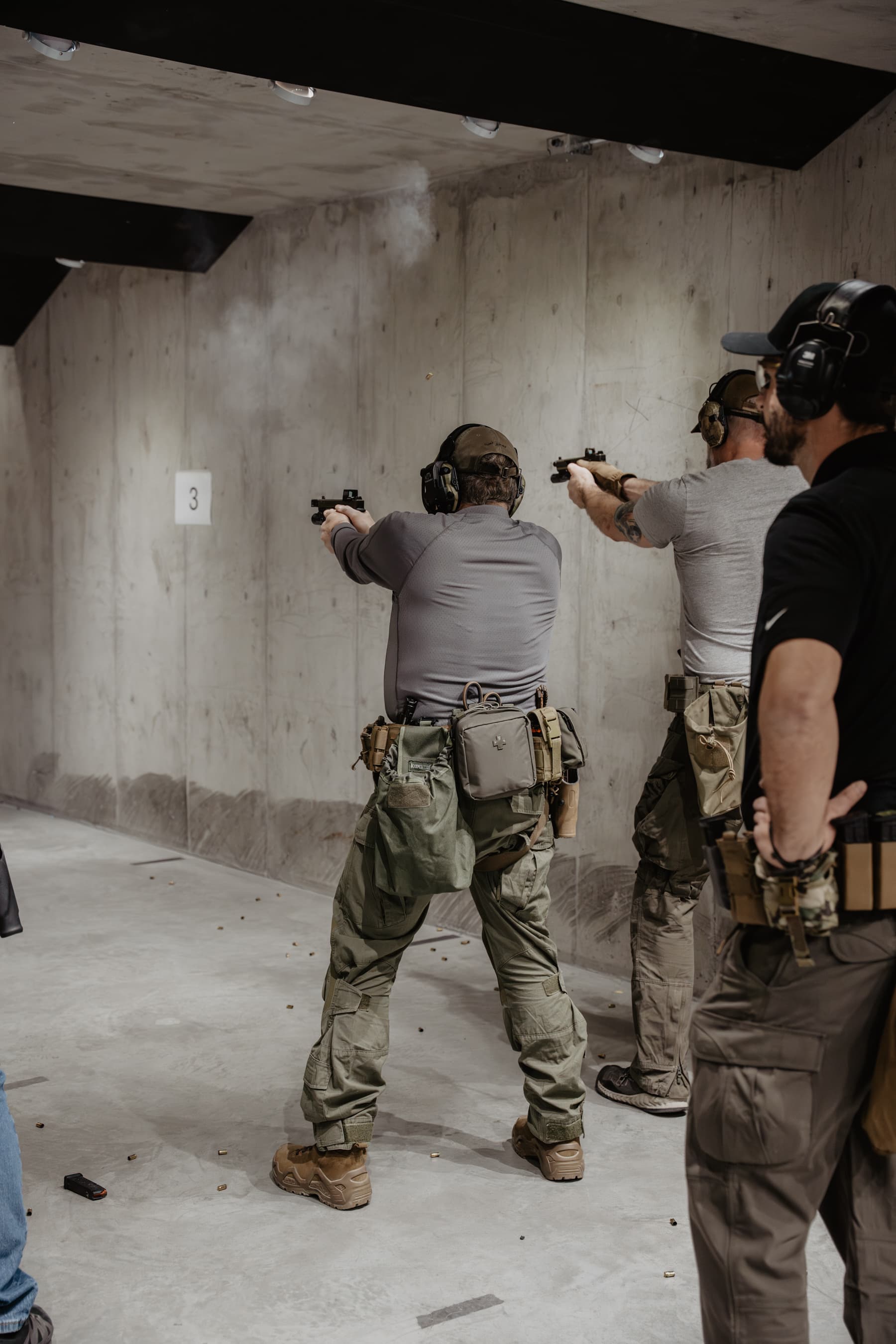
Two students mid-fire on the range, smoke from the muzzle, instructor observing

Foundation: Core Pistol Skills — Hazel Academy

Master the Fundamentals That Make Every Shot Count

A five-part modular pistol training system built around the essential elements of pistol performance — Holster, Sight, Trigger, Grip — before a final integration module that puts it all together.

Calgary, Alberta
Half day per module
6–12 students
All experience levels

— The problem

You can hit the target — but do you know why you miss when you miss?

Most pistol training runs you through drills. You shoot, you check your groups, you try harder next time. If it works, great. If it doesn't, you guess.

Three things drive every shot — sight, trigger, grip. When one breaks down, the other two compensate, and the compensation creates inconsistencies you can't train away with more reps.

You don't need more rounds downrange. You need to know what your eyes, your trigger finger, and your grip are actually doing — and what to do about it.

— The five modules

One variable at a time. Then put them together.

Each module isolates a single performance variable so you build technical consistency by concentrating on one thing. Take any module independently, or run all five for a structured pathway.

01

Holster

Draw mechanics, presentation, and re-holstering — the foundation skills most courses skip.

You leave with — A repeatable, safe draw stroke. Qualifies you to work from the holster at Calgary Shooting Centre.

See full classroom + range breakdown

Classroom

The four-count draw stroke and safe re-holstering

  • Establishing a correct and consistent grip at the draw
  • The four-count draw stroke: grip, clear, orient, extend
  • Safe re-holstering — the step most shooters rush
  • Situational awareness and muzzle discipline throughout
  • Speed as an outcome of consistency, not the other way around

Range

Live, supervised holster work from a controlled ready position

  • Draw stroke repetitions with instructor feedback
  • Index, clearance, and full extension under live conditions
  • Deliberate re-holstering with muzzle awareness and a clear holster mouth
  • Building the standard ranges and competitions expect
  • Holster qualification recognized at Calgary Shooting Centre
02

Sight

Visual processing, sight alignment, dominant-eye management, and how stress changes what you see.

You leave with — Diagnose your specific visual profile and correct aiming flaws before you ever pull the trigger.

See full classroom + range breakdown

Classroom

Sight alignment, dominant-eye management, vision under stress

  • Dominant eye identification and management techniques
  • Binocular vision, stereoscopic vision, and ghost vision concepts
  • Faster target acquisition at varying distances
  • How eyes perform differently at short and long range under stress
  • Correcting common aiming flaws and weak-eye adaptation

Range

Live-fire application of sight principles

  • Adapted shooting positions for dominant-eye correction
  • Target acquisition drills at varying distances
  • Aiming under stress (timed and pressure-based)
  • Advanced target work using classroom concepts
  • Practical exercises applying ghost vision and binocular focus
03

Trigger

Trigger control mechanics, pressure application, shot-break consistency, and recoil anticipation.

You leave with — A cleaner trigger press and the diagnostic vocabulary to fix specific errors instead of just "squeezing slower."

See full classroom + range breakdown

Classroom

Pressure application, shot break, recoil anticipation

  • How pressure application affects shot placement
  • Shot break consistency and what causes inconsistent breaks
  • Recoil anticipation — diagnosing flinch and pre-ignition push
  • Common trigger errors and their corrections
  • Dry-fire exercises isolating trigger press from other variables

Range

Live-fire trigger drills with diagnostic feedback

  • Controlled pressure application drills at varying cadences
  • Shot break isolation exercises with instructor feedback
  • Recoil anticipation correction under live-fire conditions
  • Diagnostic exercises identifying specific trigger errors
  • Consistency drills under time pressure
04

Grip

Hand positioning, pressure distribution, support-hand engagement, and recoil management.

You leave with — A repeatable grip that manages recoil without conscious effort — and the awareness to spot when it's shifted.

See full classroom + range breakdown

Classroom

Hand positioning, pressure distribution, recoil theory

  • Primary and support-hand placement
  • Pressure distribution and how grip affects recoil path
  • Support-hand engagement for shot-to-shot consistency
  • How grip mechanics maintain visual stability (links to Module 1)
  • Common grip errors and their downstream effects

Range

Live-fire recoil management and grip consistency

  • Grip pressure drills under recoil
  • Support-hand engagement during live fire
  • Recoil management across multiple shot strings
  • Grip consistency checks shot-to-shot
  • Connecting grip changes to shifts in accuracy
05

Performance Integration

Combine sight, trigger, and grip into a unified shot process across distances and conditions.

You leave with — A self-coaching framework you keep using long after the course ends.

See full classroom + range breakdown

Classroom

Combining the fundamentals into one performance framework

  • Review of core principles from Modules 1–3
  • Building a personal shot process — setup to follow-through
  • Identifying individual weak points and prioritizing corrections
  • Efficiency principles — eliminating wasted movement
  • Self-coaching framework for after the series

Range

Applied shooting across varying distances and conditions

  • Integrated live-fire drills combining all three fundamentals
  • Varying distances — adapting visual and mechanical approach
  • Consistency drills under time pressure
  • Real-time self-diagnosis exercises
  • Final performance assessment with individual feedback

The series goes deep on what most courses skip: how your eyes work under stress, why your trigger press drifts, how grip ties sight and trigger together. You leave with the language and diagnostics to spot your own errors — and the drills to correct them.

— Why this works

Built around how shooters actually learn.

Hazel Academy is the training arm of Blackthorn Security. Our instruction is built from real protective and tactical work — not range theatre. The Core Pistol series exists because we kept seeing the same gaps in shooters who'd been "trained" for years.

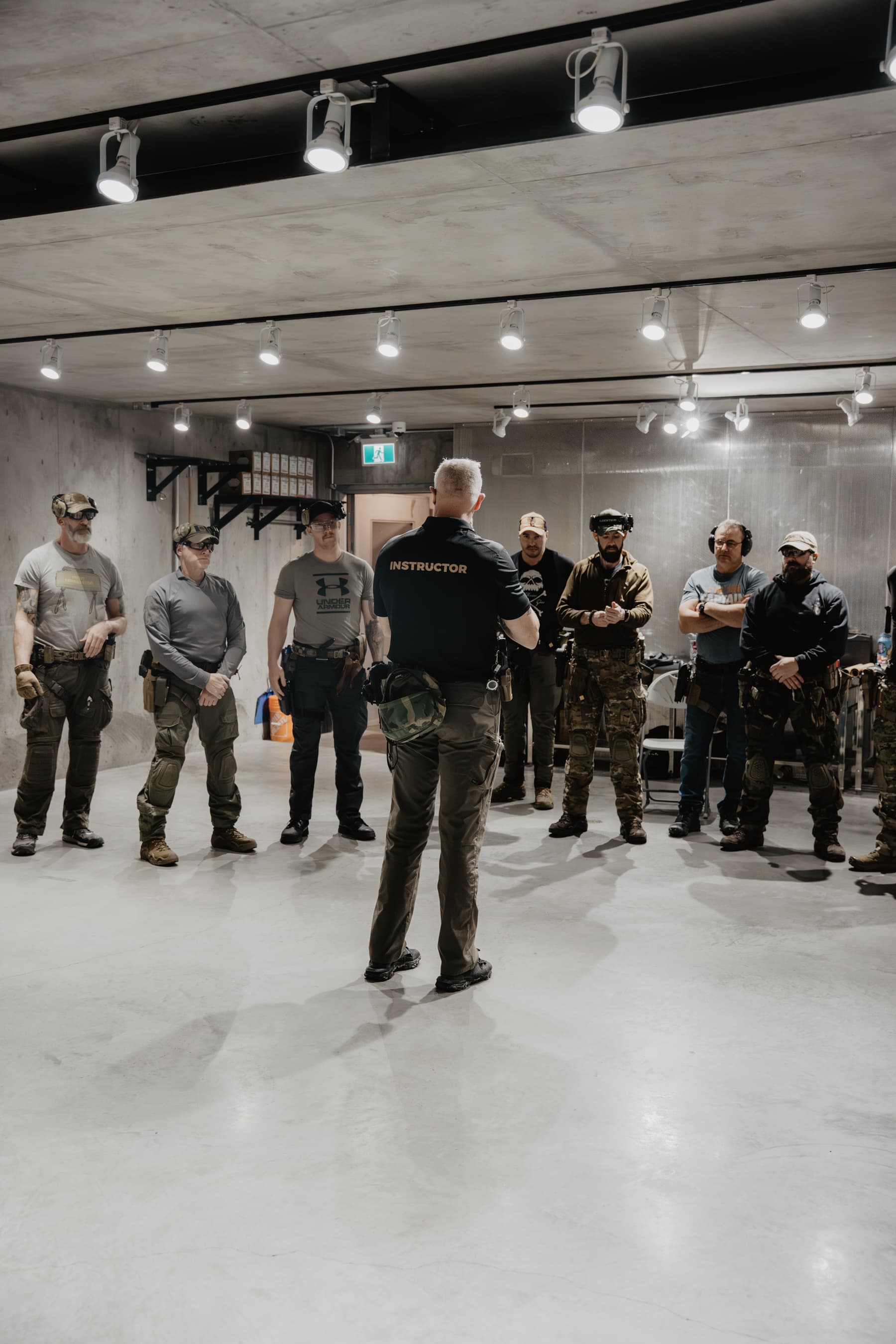
Instructor briefing a small group of students at the indoor range
01

Diagnostic, not prescriptive

We don't hand you a single technique and expect you to make it work. We teach you the mechanics of why each fundamental matters so you can identify what's breaking down — yours, specifically — and apply the right correction.

02

One variable at a time

Most courses change three things at once and call it progress. Each module isolates a single performance variable so improvement is measurable and the gains compound when you put them back together.

03

Small classes, direct feedback

6–12 students per session means every shot string gets observed and every error gets coached. You leave knowing what your own pattern is and how to coach yourself out of it.

Instructor

Led by professional instructors with operational backgrounds in protective services and tactical training.

Full instructor bios and student outcomes coming soon. In the meantime, we're happy to talk through credentials and methodology before you enroll — email us.

— Who this is for

All experience levels. Foundation level.

Designed for shooters who want to understand the mechanics — whether you're building habits from scratch, correcting long-standing ones, or qualifying to draw from a holster at Calgary Shooting Centre. 9mm experience recommended but not mandatory.

01

The Self-Taught Shooter

Recreational + sport shooters who learned by doing

You can put rounds on paper, but you've never been taught why you miss when you miss. You've picked up habits from YouTube, range buddies, or trial and error — and some of them are holding you back. This series gives you the technical foundation to fix problems instead of repeating them.

02

The Competitive Shooter

IPSC, IDPA, and practical-shooting hopefuls

You want to qualify for holster work at Calgary Shooting Centre or enter IPSC/IDPA events with verified draw competency. Module 1 gives you the formal qualification — and the rest of the series builds the technical depth that separates competitive performance from range plinking.

03

The Working Professional

Law enforcement, security operators, military

You shoot regularly as part of your job, but qualification standards don't build real technical depth. You know you could be better, and you want to understand the mechanics behind your performance — not just pass a course of fire. This series isolates the fundamentals your annual quals never cover.

04

The Armed Professional

Operators for whom draw is an operational reality

Drawing from a holster isn't a range skill for you — it's an operational requirement. The Holster module builds the deliberate, repeatable draw and re-holster you need under pressure, and the rest of the series strips the firing mechanics down to the variables that actually matter.

05

The Newer Shooter

Anyone building skills from scratch

You're early in your shooting development and want to build the right habits from the start instead of correcting bad ones later. The series teaches fundamentals at a level that makes sense whether you've fired 50 rounds or 5,000. Apart from the Holster module, all live-fire starts from a controlled ready position.

Not suitable for individuals who are uncomfortable handling firearms or who don't meet legal requirements for firearm possession.

— Register

Pick a module — or run the full series.

Same per-module price either way. Take one to fix a specific weakness, or take all five for a structured pathway from fundamentals to applied execution. Confirmation within 24 hours of enrolling.

  • Secure Stripe checkout — confirmation email within 24 hours
  • Rental firearm + gear available on-site (~$30)
  • All experience levels — foundation level, no holster draw
  • 6–12 students per session — direct instructor feedback

Select module(s) to enroll

Total: $0.00 + GST

Have questions? Contact us

— Logistics & what's included

Calgary. Half day per module. Rental gear available.

Schedule

12:00 — 16:00 (4 hours per module)

Module 1 — Holster

May 23, 2026

Open

Module 2 — Sight

June 6, 2026

Open

Module 3 — Trigger

June 20, 2026

Open

Module 4 — Grip

July 4, 2026

Open

Module 5 — Performance Integration

Date TBA

Location

Calgary, Alberta

Exact address provided upon enrollment

Format

Classroom theory + guided live-fire range exercises

Prerequisites

Foundation level. No holster draw. 9mm experience recommended.

Class size

6–12 students per session

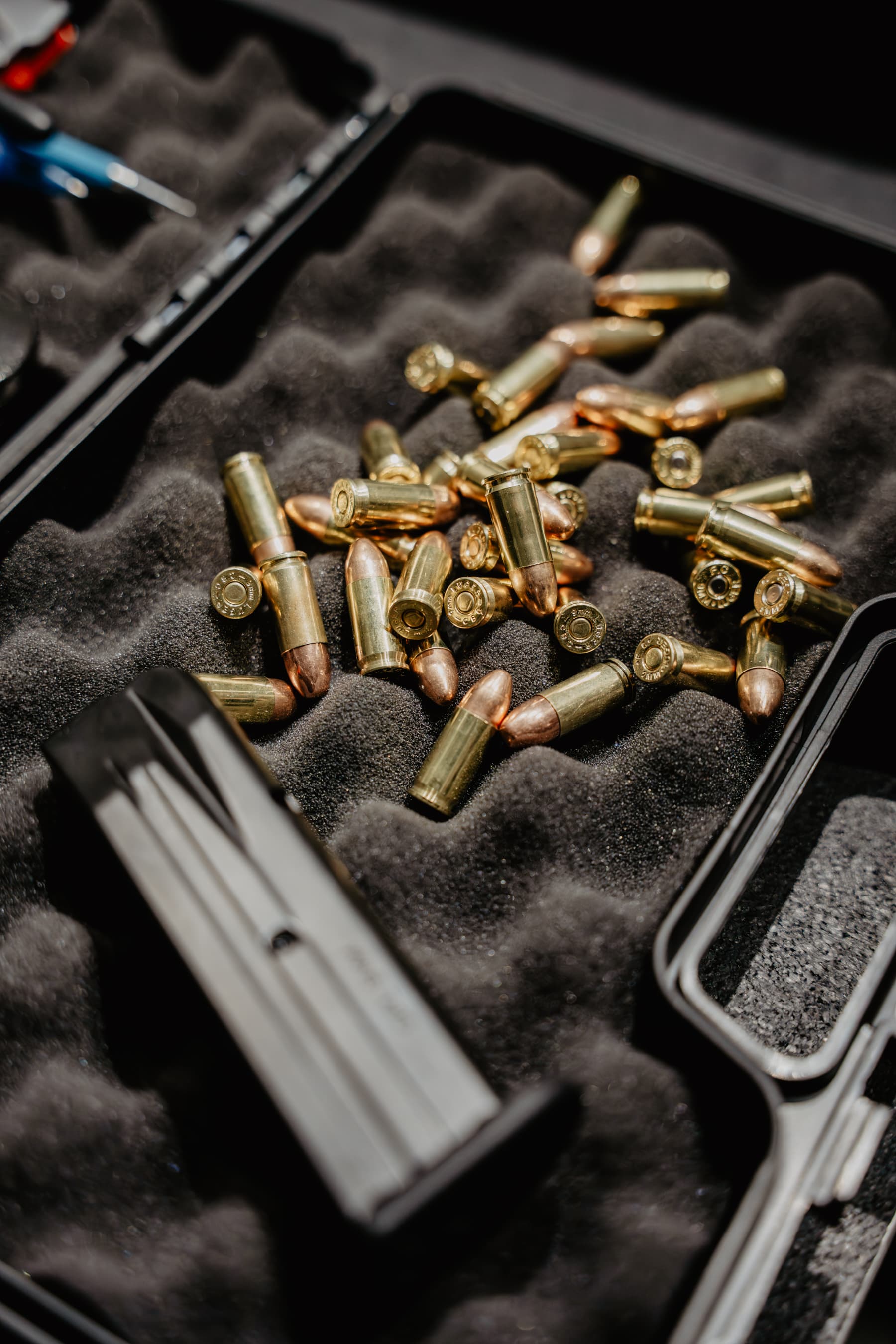
9mm rounds and a pistol magazine in a foam-lined case

You're covered for

  • Targets
  • 150 rounds of ammunition per module
  • Teaching supplies

You bring

  • Own firearm (9mm)
  • Ammunition
  • Belt, eye protection, holster, 2× magazine pouches

No gear? Rental firearm and equipment available on-site for ~$30. Food available to order on-site.

FAQ

Common Questions

If you have a question not answered here, reach out and we'll respond within 24 hours.

Holster can be taken as a standalone — like every module in the series, it addresses a single skill set independently. If you're planning to complete the full series, we recommend starting here. The draw stroke is a prerequisite skill for applied pistol work, and the habits built in this module carry forward into everything else. If you've already attended other modules, Holster slots in cleanly and fills a gap most shooters have.

— Final call

Stop guessing why you miss.

Most shooters have never been taught the diagnostics. Foundation: Core Pistol Skills breaks down the three variables that drive every shot, gives you the language to spot what's breaking down, and builds the mechanical consistency to fix it.

Small classes mean direct instructor feedback. Take one module or take all five — same per-module price either way.

Have questions? Email us

Select module(s) to enroll

Total: $0.00 + GST

Have questions? Contact us